

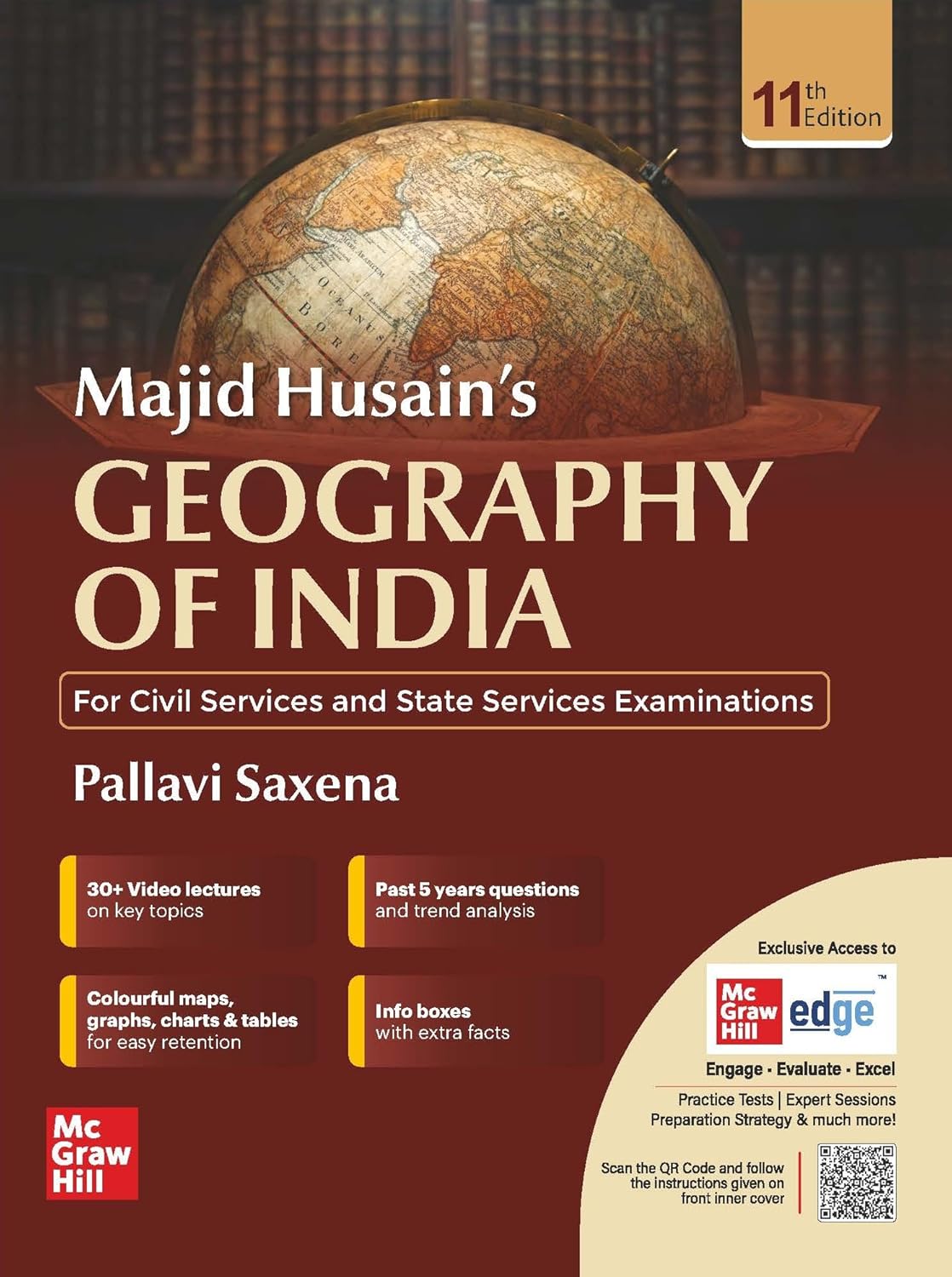
Geography of India, 11e for UPSC CSE 2026 by Pallavi Saxena
-
Written by Pallavi Saxena
- Publisher MC GRAWHILL
- Year 1 March 2025
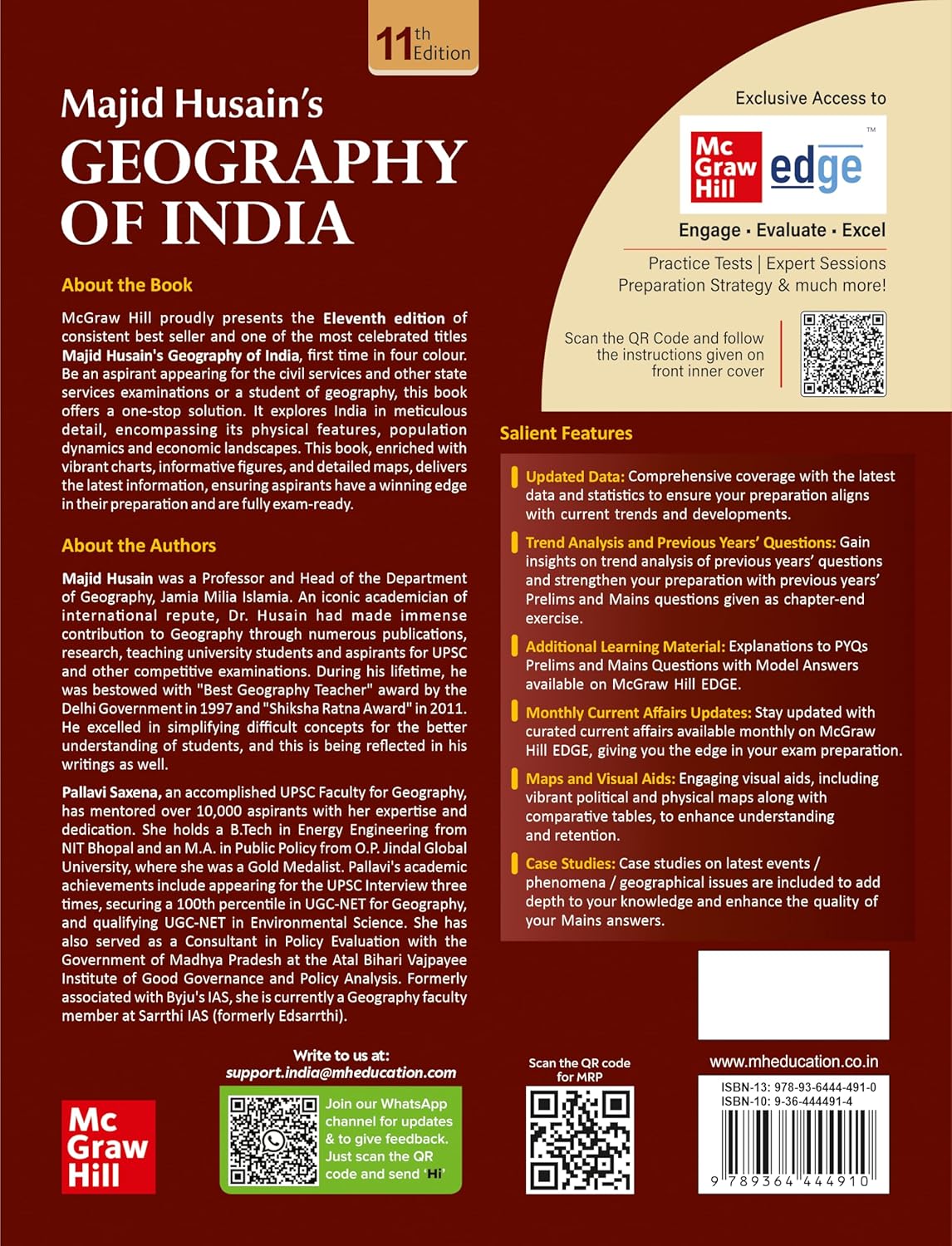
Salient Features 🌎 Comprehensive Subject Coverage: Delves into diverse aspects of Indian geography, including geological structure, physiography, drainage and water resources, climatology, mineral resources, agriculture, biodiversity, transport systems, population and settlements and more. ⛰️ Contemporary and Niche Topics: Covers cutting-edge topics like Somalian jet streams, Coral Bleaching, initiatives taken by government towards Forest Protection, Gift City, micro-irrigation, bio-saline agriculture, organic farming initiatives, digital economy trends, Cyber Warfare, Freight Villages, geostrategic significance of islands, Indian Ocean Dipole, Blue Economy, Climate Change and more. 🌎 Integrated Current Affairs and Updated Data: Incorporates the latest data and statistics to ensure alignment with current trends and developments. Monthly current affairs updates are available via McGraw Hill EDGE to keep readers exam-ready. ⛰️ Innovative Learning Tools: Features point-wise content, tabular representations, flow diagrams, ‘More Info’ boxes and smart charts for clarity and quick revision. Case studies and informatics added for enhanced understanding while writing your Mains answers. 🌎 Exam-Oriented Preparation: Includes trend analysis of previous years' questions and chapter-end exercises with PYQs (Prelims and Mains). To strengthen your preparation for competitive exams, Model Answers are available on McGraw Hill EDGE. ⛰️ Visual Enhancements: Updated with new colourful, engaging and informative maps, and comparative charts to simplify complex topics and improve retention. 🌎 Structured and Reader-friendly: Organised into well-defined sections with basics integrated into each topic for better clarity and accessibility, catering to learners of all levels. ⛰️ Focus on Case Studies: Includes case studies to add depth to your knowledge and improve the quality of Mains answers by offering practical insights and applications of theoretical concepts. 🌎 Interactive and Accessible Resources: Enhances learning with McGraw Hill EDGE, providing videos on key topics, model answers for Mains questions, and curated study material to support your preparation journey. What Makes This Book Special 🚀 Latest Data and Trends: Features updated statistics (2023-24), current affairs, and recent developments for relevance in competitive exams. 🚀 Exam-Centric Approach: Focuses on competitive exam needs with PYQs, trend analysis, model answers, and chapter-end exercises for Prelims and Mains. 🚀 Interactive Digital Resources: Offers additional material, including PYQ explanations and monthly current affairs updates, through McGraw Hill EDGE. 🚀 Colorful Maps and Diagrams: Enriched with colourful and vibrant maps, flowcharts, and diagrams to simplify complex topics and aid retention. 🚀 One-stop solution: Combines geological, physical, climatic, economic, and political geography with cutting-edge topics like cyber warfare, Blue Economy, and sustainable agriculture. Table of Contents Chapter 1 Geological Structure Chapter 2 Physiography Chapter 3 Drainage Systems and Water Resources Chapter 4 Climate Chapter 5 Forest and Wildlife Chapter 6 Soils Chapter 7 Mineral Resources Chapter 8 Conventional and Non-conventional Energy Resources Chapter 9 Agriculture Chapter 10 Livestock and Marine Resources Chapter 11 Industries Chapter 12 Transport, Communication and Trade Chapter 13 Cultural Setting and Population Chapter 14 Settlements Chapter 15 Regional Development and Planning Chapter 16 India-Political Settings Chapter 17 Contemporary Issues
Related Books

.png)
.png)
.png)
.png)